We are pleased to share a recap of our recent Let’s Talk Grad School series held during the Fall & Spring semesters. These events focused on supporting graduate students in navigating the challenges of academia and fostering a strong community within our university.
Please refer to this document for our upcoming Let’s Talk Grad School series topics and Zoom registration links for the 2026-27 academic year!
Our Series

Ballin’ on a Budget: Financial Wellness in Graduate School [A video recording]
April 11, 2026
This session focused on helping students navigate the financial realities of graduate education. Panelists included Dr. Blake Hipsley, a recent Physics Ph.D. graduate from the University of Michigan; Dr. Nicole Telfer, a developmental psychologist and former McNair Scholar at Pennsylvania State University; and Dr. Tania Lizarazo, Associate Professor in Global Studies and Modern Languages and Director of the Critical Disability Studies minor at UMBC. Drawing from their own graduate school experiences, panelists shared practical strategies for budgeting, evaluating funding opportunities, and maintaining financial wellness while pursuing advanced degrees.
Key topics discussed during the event included:
- Budgeting and Financial Planning:
Panelists shared practical strategies for managing finances during graduate school, including creating budgets, tracking expenses, building savings, and planning for long-term financial goals. They emphasized the importance of understanding personal spending habits, setting financial priorities, and making intentional decisions that support both immediate needs and future aspirations. - Maximizing Funding and Financial Resources:
The discussion explored ways graduate students can reduce financial stress through assistantships, fellowships, grants, scholarships, and university resources. Panelists encouraged students to research funding opportunities, connect with current graduate students, seek emergency and support programs, and advocate for themselves when evaluating funding packages or negotiating offers. - Balancing Financial Responsibility and Quality of Life:
Panelists highlighted the importance of maintaining personal well-being while managing a graduate student budget. They discussed finding affordable ways to travel, socialize, pursue hobbies, and build community, emphasizing that financial responsibility does not require sacrificing meaningful experiences. The session also underscored the value of financial literacy, responsible credit use, and developing habits that support long-term financial wellness.

Navigating Graduate Studies with Marginalized Identities [A video recording]
February 25, 2026
This panel discussion explored the experiences of students and professionals navigating graduate education while holding marginalized identities. Panelists included Dr. Brandon Beck, Assistant Professor of Secondary Social Studies Education in the Department of Education at UMBC; Dr. Antoinette Newsome-Lindsey, Associate Director of Moon Shot for Social and Economic Mobility at EAB, a higher education technology and research organization; and Dr. Maria Sanchez, a mechanical engineer who serves as Director of the Engineering and Computing Education Program in the Dean’s Office within UMBC’s College of Engineering and Information Technology. Through personal stories and professional insights, panelists discussed the challenges of underrepresentation, the importance of community and mentorship, and strategies for creating more equitable and inclusive academic spaces.
Key topics discussed during the event included:
- Navigating Graduate School as a Marginalized Student:
Panelists shared experiences related to identities including race, ethnicity, gender, nationality, and first-generation status. They discussed challenges such as underrepresentation, imposter syndrome, racism, sexism, cultural barriers, and feeling isolated within academic spaces. Despite these obstacles, panelists highlighted the resilience and determination that helped them persist and succeed. - The Importance of Community, Mentorship, and Representation:
A central theme of the discussion was the value of finding mentors, peers, and faculty members who understand and affirm students’ lived experiences. Panelists described how supportive communities, identity-based organizations, and culturally responsive mentors provided encouragement, guidance, and a sense of belonging throughout graduate school. They emphasized that success is often strengthened through collective support rather than navigating challenges alone. - Responding to Bias and Systemic Barriers:
The panel explored ways marginalized students may experience invalidation through stereotypes, assumptions, bias, and institutional barriers. Speakers discussed the importance of self-advocacy, recognizing systemic challenges, and developing strategies to navigate environments where they may be underrepresented. They also stressed that these experiences can continue beyond graduate school and into professional careers, making preparation and support systems especially important.

First in the Academy [A video recording]
November 5, 2025
This panel discussion explored the experiences of first-generation students navigating graduate education. Panelists included Sarah Turner, a third-year Ph.D. student studying Organizational Behavior at Drexel University’s Business School; Zaira Girala Muñoz, a fourth-year student in Ohio State University’s combined M.A.-Ph.D. English program specializing in medical rhetoric and disability studies; and Aritra Samanta, a doctoral student in Public Policy at UMBC specializing in urban policy and evaluation methods. Through personal experiences and practical advice, panelists highlighted the unique strengths, challenges, and opportunities that accompany being the first in one’s family to pursue advanced degrees and offered guidance for building successful graduate school experiences.
Key topics discussed during the event included:
- Leveraging Strengths as a First-Generation Scholar:
Panelists emphasized the value of skills often developed through first-generation experiences, including resourcefulness, resilience, relationship-building, and community engagement. They discussed how seeking support, asking questions, and utilizing available resources can open doors to academic and professional opportunities. - Navigating Graduate School Expectations and Hidden Challenges:
The discussion addressed common obstacles faced by first-generation students, including uncertainty about academic norms, imposter syndrome, self-advocacy, and adapting to the increased independence of graduate education. Panelists encouraged students to seek guidance early, communicate openly with mentors, and recognize that asking for help is a strength rather than a weakness. - Building Community and Finding Support Systems:
Panelists highlighted the importance of cultivating supportive relationships with faculty, staff, advisors, and peers. They stressed that meaningful communities can provide mentorship, accountability, encouragement, and practical assistance throughout the graduate school experience, particularly during challenging periods.
Building Community During Graduate School [A video recording]
October 23, 2025
This panel discussion explored the importance of cultivating meaningful communities throughout the graduate school journey. Panelists included Dr. Monique Ransom, Associate Director in the Office of Academic and Pre-Professional Advising at UMBC; Blake Hipsley, a Physics Ph.D. candidate at the University of Michigan; Camila Ozores Silva, Program Manager for K–12 Outreach within the Computing Catalyst organization in the Department of Computer Science at the University of Maryland, College Park, and a first-year doctoral student in the Student Affairs concentration; and Emily Fabeck, a second-year master’s student and Graduate Assistant in the Experimental Psychology program at Towson University. Through personal stories and practical advice, panelists discussed the importance of mentorship, support systems, and building meaningful connections that foster belonging and success in graduate school.
Key topics discussed during the event included:
- Defining Community and Support Systems:
Panelists discussed the many forms community can take during graduate school, including family, peers, advisors, mentors, and affinity groups. They emphasized the importance of surrounding oneself with individuals who provide encouragement, accountability, and emotional support throughout the graduate journey. - Building Meaningful Academic and Personal Connections:
Participants learned strategies for developing supportive relationships with cohort members, faculty mentors, and advisors. Panelists highlighted the value of open communication, seeking mentorship, and finding individuals who align with both academic goals and personal values. - Balancing Scholarship, Wellness, and Relationships:
The discussion addressed the challenges of managing graduate school responsibilities while maintaining personal well-being and important relationships. Panelists shared practical approaches for setting boundaries, prioritizing self-care, creating intentional time for community, and recognizing that academic success should not come at the expense of personal wellness.
The Neurodivergent Experience in Graduate School [A video recording]
April 23, 2025
This panel discussion explored the experiences of neurodivergent students navigating graduate education and the importance of finding environments that support individual needs and well-being. Panelists included Blake Hipsley, a Physics Ph.D. candidate at the University of Michigan; Zaira Girala Muñoz, a doctoral student in English at The Ohio State University specializing in medical rhetoric and disability studies; Diane Stonestreet, a doctoral student and researcher; Amy Tondreau, a doctoral student and researcher; and Janayah Brown, a graduate student and advocate. Through personal experiences and practical advice, panelists discussed selecting graduate programs, accessing accommodations, building supportive communities, and advocating for themselves throughout their academic journeys.
Key topics discussed during the event included:
- Finding Graduate Programs That Support Neurodivergent Students: Panelists encouraged students to evaluate programs beyond academics by considering funding, healthcare access, disability services, campus accessibility, graduate student support systems, and institutional culture. Speakers emphasized the importance of identifying environments where students feel valued, supported, and able to succeed as their authentic selves.
- Navigating Accommodations, Disclosure, and Self-Advocacy: The discussion highlighted the personal nature of deciding whether and when to disclose a neurodivergent identity. Panelists shared experiences working with disability services, requesting accommodations, communicating with advisors, and advocating for their needs while balancing privacy, comfort, and academic success.
- Building Community and Prioritizing Well-Being: Speakers emphasized that graduate school should not be navigated alone. Panelists discussed the importance of mentors, advisors, peers, mental health resources, and supportive academic communities that can provide encouragement, understanding, and practical assistance during challenging periods of graduate study.
Careers After Graduate School [A video recording]
March 8, 2025
This panel discussion explored the diverse career pathways available after graduate school and how advanced degrees can create opportunities for leadership, research, policy, and industry impact. Panelists included Dr. Lynn Adams, Associate Vice President and Chief Human Resources Officer at UMBC; Dr. Makila Myers-Burgos, Project Director at the Council of Chief State School Officers; Dr. Stephanie Breen, Director of Research at Strada Education Foundation; and Dr. Adaku Uchendu, Artificial Intelligence Researcher at MIT Lincoln Laboratory. Through personal reflections and professional experiences, panelists discussed their educational journeys, the value of mentorship, and how graduate education helped shape their careers and professional identities.
Key topics discussed during the event included:
- Building Community, Mentorship, and Professional Networks: Panelists emphasized the importance of cultivating relationships with mentors, peers, faculty, and professional contacts throughout graduate school and beyond. They shared how strong support systems helped them navigate challenges, discover opportunities, and build successful careers.
- Exploring Career Pathways Through Graduate Education: Speakers discussed how graduate degrees opened doors to careers in research, education, nonprofit leadership, human resources, public policy, and technology. Panelists encouraged students to remain open to evolving interests, seek internships and professional experiences, and view graduate education as a tool for expanding career possibilities.
- Using Advanced Degrees to Create Impact and Leadership Opportunities: The discussion highlighted how graduate education can position individuals to influence organizations, conduct meaningful research, shape policy, and advocate for underserved communities. Panelists reflected on the responsibility that comes with advanced degrees and the importance of using their expertise to create positive change while supporting future generations of students.
Navigating Graduate School as First-Generation or Independent Students [A video recording]
November 7, 2024
This panel discussion explored the experiences of first-generation and independent students pursuing graduate education. Panelists included Blake Hipsley, a Ph.D. candidate in Physics at the University of Michigan and UMBC McNair alumnus; Dr. Emmanuel Payano-Frias, a recent doctoral graduate from Bradley University whose research focuses on academic preparedness, resilience, and imposter syndrome among underrepresented students; and Sarah Turner, a doctoral student in Organizational Behavior at Drexel University’s Business School. Through personal experiences and practical advice, panelists discussed the challenges and opportunities of navigating graduate school without family experience in higher education and shared strategies for success throughout the application and graduate school journey.
Key topics discussed during the event included:
- Overcoming Imposter Syndrome and Self-Doubt: Panelists reflected on the uncertainty many first-generation and independent students experience when applying to graduate school. They emphasized the importance of trusting personal growth, recognizing one’s potential, and seeking reassurance from mentors who can help students see strengths they may overlook in themselves.
- Building Strong Support Networks and Mentorship: Speakers highlighted the critical role of mentors, peers, faculty members, and professional networks throughout the graduate school process. Panelists encouraged students to seek feedback, connect with current graduate students, and utilize programs such as McNair and campus career services to navigate applications and professional development.
- Using Graduate Education to Create Meaningful Impact: The discussion emphasized pursuing research and academic work that aligns with personal passions, values, and community needs. Panelists shared how their own educational journeys were motivated by a desire to contribute to their fields, support underserved communities, and create positive change through research, teaching, and leadership.
Would’ve, Could’ve, Should’ve’s of Grad School Prepping [A video recording]
October 16, 2024
This interactive session encouraged students to reflect on their motivations for pursuing graduate education and explore important considerations when planning their academic journeys. Facilitated by McNair staff, including Sahaadat Hammed-Owens, Ting Huang, and Michael Hunt, the discussion provided students with an opportunity to ask questions about graduate school preparation, funding opportunities, work-life balance, and personal goal setting. Through guided reflection and open dialogue, participants gained a deeper understanding of how graduate education can align with their academic, professional, and personal aspirations.
Key topics discussed during the event included:
- Clarifying Goals and Motivations for Graduate School:
Participants reflected on their reasons for pursuing graduate education and discussed how advanced degrees can support career goals, research interests, community impact, and personal growth. The session encouraged students to identify their individual motivations and consider how graduate school fits into their long-term plans. - Understanding Funding and Educational Opportunities:
The discussion explored various pathways for financing graduate education, including assistantships, tuition remission programs, employer-sponsored educational benefits, and institutional resources. Students learned about factors to consider when evaluating graduate programs and funding packages. - Maintaining Well-Being and Preventing Burnout:
McNair staff emphasized the importance of self-care, community, and work-life balance throughout graduate school. Participants discussed strategies for managing stress, building support networks, setting boundaries, and maintaining interests and relationships outside of academics to support long-term success.
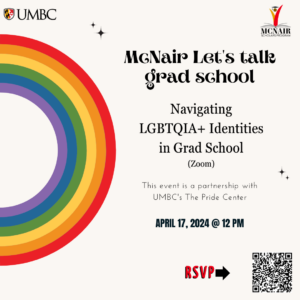
Navigating LGBTQIA+ Identities in Grad School [A video recording]
April 17, 2024
In collaboration with The Pride Center, this session explored diversity and inclusion for LGBTQIA+ students in graduate studies. UMBC McNair alums shared their experiences, shedding light on the unique challenges and opportunities within the LGBTQIA+ community in academia.
Key topics discussed during the event included:
- Diversity and Inclusion: Panelists shed light on the importance of creating a diverse and inclusive environment within graduate programs, where individuals of all identities feel valued, respected, and supported in their academic pursuits.
- Navigating Challenges: Attendees had the opportunity to engage in candid discussions about the unique challenges and obstacles faced by LGBTQIA+ graduate students, from navigating institutional policies to confronting discrimination and bias in academic settings.
- Building Supportive Networks: The event emphasized the significance of building strong support networks within the LGBTQIA+ community and beyond. Panelists shared strategies for finding allies, seeking out mentorship opportunities, and fostering a sense of belonging within the academic environment.
Finding Community and Networking in Grad School [A video recording]
February 7, 2024
This event centered on the importance of building supportive networks during graduate school. Through panel discussions, workshops, and networking opportunities, attendees gained valuable insights into effective communication, relationship-building strategies, and the transformative impact of mentorship and peer support.
Key topics discussed during the event included:
- The Power of Community: Attendees were reminded of the transformative impact of surrounding oneself with a supportive network of peers, mentors, and professionals. Discussions centered on strategies for establishing and nurturing these vital connections, emphasizing the role they play in both academic and personal growth.
- Effective Networking Strategies: Panelists shared valuable insights into the art of networking, offering practical advice on how to navigate professional relationships and forge meaningful connections within one’s field. Attendees learned about the importance of effective communication, strategic outreach, and cultivating authentic relationships in building a successful career.
- Mentorship and Peer Support: The event underscored the value of mentorship and peer support in fostering academic excellence and personal development. Through panel discussions and interactive workshops, participants gained a deeper understanding of the profound impact that mentorship can have on shaping their graduate school experience.
Financing Grad School [A video recording]
November 14, 2023
Our event addressed the financial aspects of graduate education, exploring funding options within institutions and through external fellowships. Panelists, including Griselda Flores and Jacquelyn Strickland, shared valuable insights alongside UMBC McNair alumni Brian Hipsley and Diane Stonestreet, offering practical advice on navigating the costs of graduate studies.
Key topics discussed during the event included:
- Funding Options: The event discussed various funding options available for graduate education, including opportunities within institutions and external fellowships.
- Navigating Costs: Panelists provided practical advice on navigating the costs associated with graduate studies, offering strategies for managing expenses and maximizing funding opportunities.
- Financial Resources: Participants learned about accessing financial resources to support their graduate education journey, including scholarships, grants, loans, and other forms of financial aid.
Exploring Research in Grad School [A video recording]
October 4, 2023
This session delved into the world of research, discussing its significance, methodologies, and its relevance beyond academia. Expert panelists, including Dr. Maria Sanchez, Dr. April Householder, Dr. Earl Brooks, and Dr. Jennifer Mata-McMahon, engaged participants in illuminating discussions on research skills and its broader applications.
Key topics discussed during the event included:
- Research Significance: The session explored the significance of research in graduate school, discussing its role in advancing knowledge, driving innovation, and solving real-world problems.
- Research Methodologies: Expert panelists engaged participants in discussions on research methodologies, including qualitative and quantitative methods, experimental design, data analysis, and interpretation.
- Broader Applications: Participants gained insights into the broader applications of research skills beyond academia, including their relevance in industry, government, non-profit organizations, and other professional settings.
As we continue to support the growth and success of our graduate student community, we encourage all students to take advantage of these resources and engage actively in building a supportive and inclusive academic environment.